No Limit: A Bold Embroidery Design Review
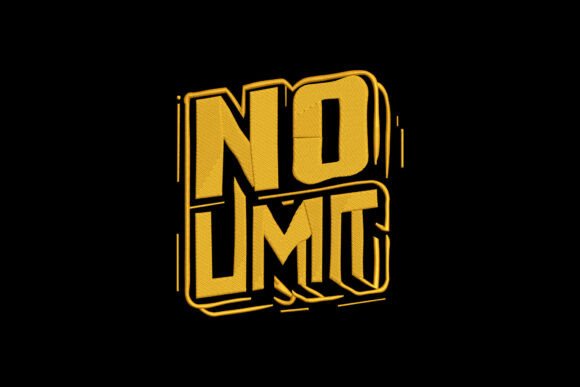
As an experienced embroidery designer specializing in commercial branding, I approach every new machine embroidery design with a critical eye toward production viability and brand impact. When evaluating "No Limit," a bold 3D typography piece described as heavy block-style lettering with a sharp perspective, my immediate assessment focuses on its utility for small business merchandise. This is not merely decorative text; it is a structural graphic element rendered in bold yellow with thick outlines. For apparel decorators, Etsy sellers, and creative studios, this design represents a specific category of inspirational branding that demands technical precision to translate effectively from screen to fabric.
Visual Personality and First Impressions
The first impression of No Limit is undeniably assertive and modern. In the realm of brand identity, typography carries weight, and this design communicates confidence through its heavy, block-style construction. The sharp 3D perspective adds a layer of dynamism that flat text cannot achieve, suggesting forward momentum and energy. For a handmade product or creative studio, this visual language bridges the gap between artisanal warmth and professional polish. It feels premium rather than playful, making it suitable for businesses that want to project competence alongside creativity.
The specified bold yellow rendering with thick outlines creates high contrast, which is essential for visibility on merchandise. However, as a designer, I note that this colorway implies a specific aesthetic. Yellow thread on dark fabrics pops vibrantly, but it also requires meticulous tension management to prevent the bobbin thread from showing. The "thick outlines" mentioned in the product description suggest a satin or dense fill border, which anchors the 3D effect but also increases stitch density. This makes the design substantial, requiring careful consideration of placement to avoid weighing down lightweight garments.
Strategic Applications for Small Business Merch
For small business owners and merch creators, No Limit serves multiple functional roles beyond simple decoration. Its bold geometry makes it an excellent candidate for embroidered patch production. Patches require designs that read clearly at a distance, and the heavy block lettering ensures legibility even when scaled down for a sleeve detail or hat logo. Because the design features a self-contained shape due to its 3D block style, it digitizes cleanly into merrowed-edge patches without losing definition.
In the context of custom apparel and staff uniforms, this design works exceptionally well as a chest logo accent or back yoke placement. For a café, bakery, or florist, placing No Limit on an apron creates a strong focal point that reinforces the business ethos. Apron embroidery often suffers from distortion due to the fabric's movement and washing; however, the rigid structure of this typography helps maintain shape integrity better than delicate script fonts. Similarly, for tote bag design, the bold yellow lettering provides the necessary visual weight to balance the larger canvas surface area, ensuring the brand message isn't lost in the negative space.
Cap embroidery presents another prime opportunity. The 3D perspective naturally complements the curved surface of a cap front, enhancing the dimensional illusion. Unlike complex illustrations that flatten out on curved seams, block typography adapts well to the center seam of structured caps. For Etsy sellers and digital creators, this design also functions as a powerful asset for printable mockup presentations, allowing you to showcase potential merchandise lines to clients before committing to physical sampling.
Technical Considerations and Production Cautions
While No Limit is versatile, its bold nature requires respect during production. The primary caution involves size reduction. Heavy block lettering with 3D shading has a minimum viable size. If you attempt to shrink this design for a tiny collar tag or miniature label, the internal details of the 3D perspective may collapse, and the thick outlines could merge with the letter fills. Always verify the minimum dimensions in your embroidery file specifications before resizing. If the design relies on gradient fills to create the 3D effect, aggressive downsizing will result in muddy stitching.
Fabric texture plays a significant role in the success of this design. On smooth twill or canvas, the sharp edges of the typography will remain crisp. However, on highly textured fabrics like terry cloth, fleece, or pique knits, the thick outlines may get lost. In these cases, using a water-soluble topping stabilizer is non-negotiable to keep the stitches floating above the nap. Furthermore, because the design is built with heavy coverage, hoop selection matters. Using a hoop size that is too large for the design can lead to fabric shifting, while a hoop that is too tight can cause distortion in the 3D perspective. Match the hoop closely to the design dimensions to maintain registration.
Washability is another factor for commercial use. Bold yellow thread, while striking, can be prone to dye migration if placed on red or dark synthetic uniforms without proper backing. Additionally, high-density 3D designs add stiffness to the garment. Placement should avoid areas where flexibility is paramount, such as directly over a shoulder seam or near a cuff edge. For items requiring frequent industrial laundering, ensure the stabilizer used during production is permanent and robust enough to support the stitch count over time.
Impact on Brand Value and Customer Trust
Choosing a design like No Limit signals intentionality. In the crowded market of handmade goods and local services, visual consistency builds trust. A bold, well-executed typographic mark suggests that the business pays attention to details. When customers see high-quality commercial embroidery on packaging accents or staff wear, they subconsciously associate that durability with the quality of the service or product provided. The inspirational nature of the phrase "No Limit," combined with the sturdy execution, reinforces a narrative of reliability and ambition.
For product designers and crafters, integrating this design into design assets elevates the perceived value of the finished item. A plain tote bag becomes a branded statement piece; a standard work shirt transforms into a uniform that fosters team pride. This psychological impact is measurable in customer engagement and brand recall. However, this only holds true if the embroidery quality matches the design's boldness. Poor tension, misaligned outlines, or inadequate stabilization will undermine the professional image the design seeks to project.
Essential Designer Notes for Implementation
Before running No Limit on any client merchandise or personal inventory, adhere to these professional protocols:
- Test in Monochrome: Run a test sew-out in black and white first. This strips away the distraction of color and reveals the true structure of the 3D perspective and outline registration.
- Verify Licensing: Confirm commercial licensing terms specifically for business use. Ensure the digital embroidery file permits resale on finished products or use in paid branding packages.
- Check Thread Contrast: Review the bold yellow against your specific garment colors under natural and artificial lighting. Yellow can appear greenish under cool LED shop lights or washed out in direct sunlight.
- Stabilizer Strategy: Do not rely on tear-away alone for this heavy design. Use a cut-away stabilizer for stretchy fabrics to prevent the 3D blocks from puckering after washing.
- Create Client Mockups: Before production, generate a realistic mockup showing the design at actual scale on the intended garment. This manages client expectations regarding the size and visual weight of the bold typography.
- Inspect Spacing: Check the kerning and spacing within the 3D elements. Sometimes, digitized perspective creates uneven gaps that look fine on screen but disjointed in thread.
No Limit offers a compelling solution for businesses seeking to make a strong visual statement. By respecting its technical requirements and leveraging its bold personality strategically, embroiderers can transform this inspirational typography into a cornerstone of effective small business branding. Whether applied to caps, aprons, or patches, success lies in balancing the design’s artistic intent with the practical realities of thread, fabric, and commerce.