Mother and Baby Night Embroidery Review
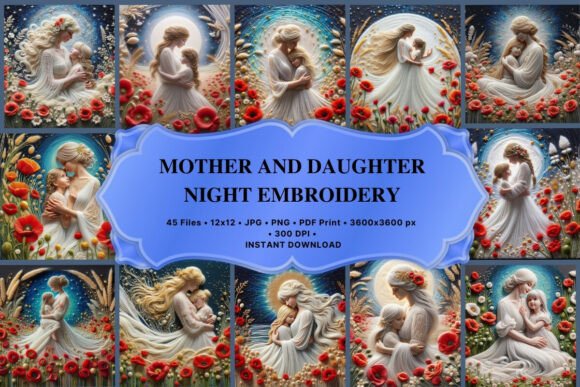
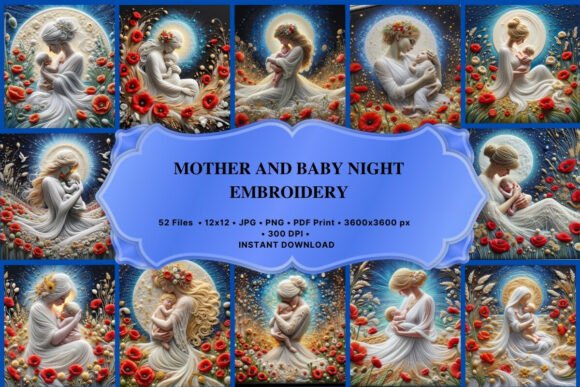
As a professional embroidery designer specializing in commercial branding and merchandise production, I approach every new machine embroidery design with a critical eye toward production viability. When evaluating the Mother and Baby Night Embroidery collection for small business applications, my primary focus shifts from pure aesthetics to functional durability and brand alignment. This collection, featuring 45 intricate 3D textile illustrations where glowing threads transform into magical visuals, presents unique opportunities and specific technical challenges for businesses ranging from boutique cafes to handmade product lines. While categorized under Backgrounds and Graphics, these designs possess enough narrative weight to serve as primary branding elements when executed correctly.
Visual Personality and Brand Alignment
The first impression of Mother and Baby Night Embroidery is undeniably evocative. The aesthetic leans heavily into premium, artisanal, and emotionally resonant territory. For a small business owner, this visual language communicates care, attention to detail, and a touch of whimsy that mass-produced graphics often lack. The "glowing thread" concept suggests high-contrast shading or specialized sheen threads, which can elevate a standard logo into a tactile experience.
However, business owners must assess if this level of intricacy aligns with their specific brand identity. For a florist, bakery, or children’s apparel brand, this style reinforces a narrative of nurturing and craftsmanship. Conversely, for an industrial supplier or corporate tech firm, the ornate nature might clash with a utilitarian image. As a designer, I see this collection performing best for brands that sell an experience or a feeling rather than just a commodity. The 3D textile illustration style implies depth, meaning your finished product will have a raised, embossed quality that invites touch—a powerful psychological trigger for customer engagement in retail environments.
Commercial Applications for Small Business Merch
In real-world scenarios, Mother and Baby Night Embroidery offers versatile application points beyond simple decoration. I have evaluated this collection across several key merchandise categories relevant to Etsy sellers and local shops:
- Boutique Aprons and Staff Uniforms: The intricate detailing works exceptionally well as a chest accent or back yoke design on canvas aprons. The 3D effect adds perceived value to staff attire, making employees feel part of a premium team.
- Tote Bag Design: Natural cotton totes provide the ideal stable base for high-density 3D embroidery. These designs can serve as the primary graphic for limited-edition shopper bags, turning a functional item into a collectible art piece.
- Custom Apparel Accents: Rather than center-chest placement, consider using these graphics as sleeve details or hem accents. This subtle integration maintains the garment's wearability while showcasing the embroidery file complexity.
- Product Packaging and Tags: Smaller iterations of these designs can function as luxury hang tags or packaging seals for handmade products, bridging the gap between digital branding and physical unboxing experiences.
- Event Merchandise: For baby showers, gender reveals, or family reunions organized by event planners, these designs offer a cohesive theme that feels custom-commissioned rather than clip-art based.
Technical Constraints and Production Warnings
While visually stunning, the description of "intricate 3D textile illustrations" serves as a warning flag for production managers. High-detail 3D embroidery requires precise execution. Here are the critical areas where caution is necessary:
Stitch Density and Fabric Texture
3D effects typically rely on higher stitch density to create relief. On lightweight fabrics like performance polyester or thin linen, this density can cause puckering or distortion. I strongly advise testing Mother and Baby Night Embroidery on heavier substrates such as denim, canvas, twill, or fleece. If you must use lighter fabric for custom apparel, you will need to adjust the underlay or reduce density in your digitizing software to prevent fabric damage.
Cap Embroidery Challenges
Applying intricate 3D designs to curved cap fronts is technically demanding. The "glowing" gradients likely involve complex color blending that may not register perfectly on a curved surface with standard hooping. For cap embroidery, I recommend selecting flatter variations from the collection or limiting the design size to the upper third of the crown to avoid registration issues near the seam.
Small Patch Sizes and Legibility
If utilizing these as an embroidered patch, verify the minimum viable size. Intricate 3D details often collapse below 3 inches. Before committing to bulk production, measure the smallest element in the design. If fine lines merge at your target patch size, the design is too complex for that application. Always prioritize clarity over detail for small-format branding.
Washability and Durability
Items requiring frequent washing, such as café aprons or children’s clothing, pose a risk for high-relief embroidery. The raised stitches are more susceptible to abrasion and snagging. For high-wear items, consider a flattened version of the design or reinforce the perimeter with a sturdy border stitch to protect the 3D elements during laundering cycles.
Designer Notes: Pre-Production Checklist
To ensure Mother and Baby Night Embroidery translates successfully from screen to substrate, follow this professional workflow before running any commercial jobs:
- Verify Licensing: Confirm the digital embroidery file includes commercial usage rights for branded merchandise. Never assume personal-use files are cleared for business sales.
- Black and White Test: Run a grayscale simulation or printout first. If the design relies entirely on color contrast to define its 3D form, it may look muddy in monochrome. Ensure the structural integrity holds without color aid.
- Stabilizer Selection: 3D designs demand robust support. Use cut-away stabilizer for stretchy fabrics and heavy tear-away or wash-away for stable goods. Do not skimp on stabilizer; it is the foundation of 3D success.
- Hoop Size Confirmation: Check the exact dimensions of all 45 designs. Ensure your machine’s maximum hoop size accommodates the largest variation without re-hooping, which introduces alignment risks.
- Thread Color Matching: "Glowing threads" implies specific sheen or variegated colors. Source thread colors that match the designer’s intent. Standard matte rayon may flatten the intended 3D optical illusion.
- Create Printable Mockups: Before stitching, generate a printable mockup to scale. Place it on the actual garment or item to visualize proportion. Digital screens often deceive regarding real-world size.
- Fabric Sample Test: Always stitch out on the exact production fabric. A design that looks perfect on felt may fail on corduroy. Document tension adjustments needed for each material type.
- Compare Design Assets: Review how these graphics sit alongside your existing logos and typography. Ensure the ornate style doesn’t overpower simpler text-based brand marks.
Impact on Business Value and Customer Perception
Integrating Mother and Baby Night Embroidery into your product line is a strategic decision that affects perceived value. In the handmade and small business sector, customers equate visible stitch complexity with effort and quality. A well-executed 3D design signals that the brand invests in superior design assets rather than generic stock art.
This elevation in presentation directly influences pricing power. An apron featuring a flat, simple logo has a price ceiling; an apron featuring an intricate, glowing 3D textile illustration justifies a premium tier. Furthermore, the emotional resonance of mother-and-baby imagery fosters trust and connection, particularly for businesses in the care, wellness, and family sectors. However, this only holds true if the production quality matches the design ambition. Poorly stabilized 3D embroidery looks messy and unprofessional, actively damaging brand reputation. By adhering to technical best practices and respecting the limitations of the medium, small business owners can leverage this collection to create distinctive, high-value merchandise that stands out in a saturated market.