Pastel Blossom Embroidery: A Designer Review
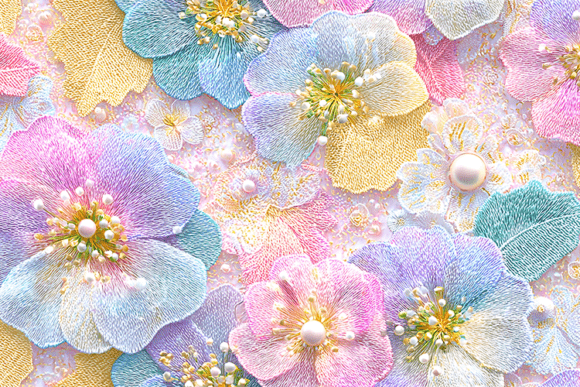
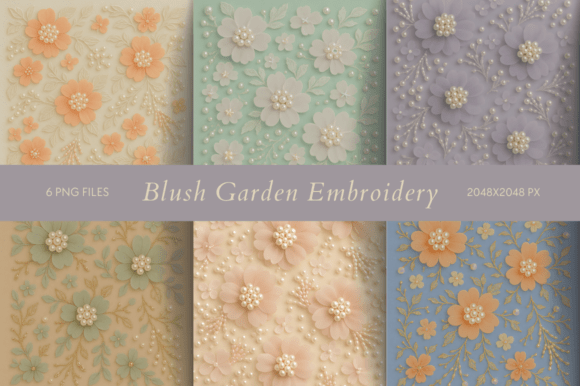
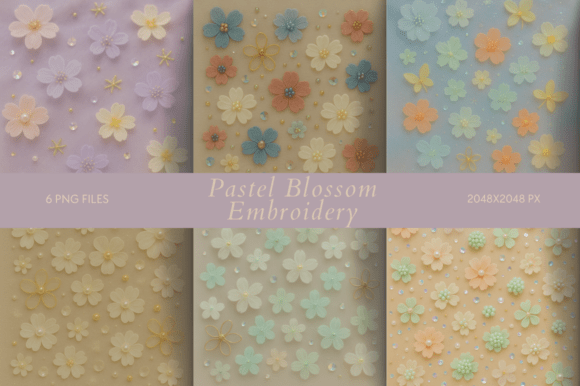
As an embroidery designer who specializes in commercial branding and merchandise production, I approach every new machine embroidery design with a critical eye toward durability, scalability, and brand alignment. When evaluating the Pastel Blossom Embroidery collection for small business applications, my primary focus is not just aesthetic beauty, but functional versatility. This set of six seamless backgrounds features delicate 3D floral elements on sheer tulle, accented with iridescent sequins and pearl beads. While visually enchanting, translating these intricate Graphics into viable small business merch requires a strategic understanding of digitizing limitations and fabric behavior.
First Impressions: Elegance Meets Commercial Viability
My immediate impression of Pastel Blossom Embroidery is that it exudes a premium, handmade sophistication often difficult to achieve with standard stock art. The use of sheer tulle as a base suggests an appliqué or lace-style technique that creates depth without excessive bulk. For businesses like boutique florists, bridal studios, artisanal bakeries, or high-end pet brands, this visual language communicates softness and attention to detail. However, the inclusion of iridescent sequins and pearl beads moves this beyond simple decoration into the realm of mixed-media embellishment. From a production standpoint, this signals that the embroidery file likely contains specialized commands for bead placement or sequin attachment, which demands specific machine capabilities and operator skill.
The "seamless background" aspect is particularly valuable for brand identity. Unlike standalone motifs, seamless patterns allow for flexible sizing across different merchandise types. Whether you are creating a wide banner for a trade show booth or a subtle accent on a garment tag, the ability to scale the pattern without visible repeat lines ensures visual consistency. This adaptability makes Pastel Blossom Embroidery a strong candidate for businesses looking to unify their custom apparel and packaging aesthetics under one cohesive design system.
Real-World Applications for Small Business Merchandise
In my experience outfitting creative studios and local shops, the true test of any design asset is its performance across diverse substrates. Pastel Blossom Embroidery shows significant promise for several key commercial applications:
- Boutique Aprons and Staff Uniforms: For cafes and florists, full-front embroidery can be heavy and uncomfortable. Using these pastel blossom designs as pocket accents, hem details, or back-yoke embellishments adds elegance without compromising wearability. The 3D floral elements provide texture that stands out against cotton twill or denim apron fabrics.
- Tote Bag Design and Packaging: Canvas tote bags serve as walking billboards for handmade brands. The sheer tulle base of this design allows for beautiful contrast against natural canvas or linen. Furthermore, because the design is categorized under Backgrounds, it can be used to create branded tissue paper stamps or heat-transfer vinyl variations for product packaging, extending the value of the digital purchase.
- Embroidered Patches and Labels: Creating custom woven or embroidered labels is essential for Etsy sellers and craft businesses. These floral graphics can be isolated or cropped to create distinct brand tags. The iridescent sequins add a luxury touch that elevates perceived product value, making them ideal for jewelry pouches, scarf tags, or premium gift wrapping services.
- Event Merchandise and Customer Gifts: For weddings, workshops, or pop-up markets, items need to feel special yet cost-effective. The delicate nature of Pastel Blossom Embroidery makes it perfect for keepsake handkerchiefs, ring pillows, or thank-you card envelopes. It bridges the gap between mass-produced merch and bespoke artistry.
Technical Considerations and Usage Limitations
Despite its beauty, professional decorators must exercise caution when deploying Pastel Blossom Embroidery in demanding environments. The combination of 3D foam or raised stitching, tulle, and physical embellishments creates specific constraints.
Fabric Texture and Stabilizer Requirements
The sheer tulle component implies a degree of transparency and delicacy. If applying this to dark uniforms or textured fabrics like fleece or pique knit, you must verify how the stitch density interacts with the base material. Dark fabrics may show through the tulle unless a backing layer is digitized into the design. Always test with appropriate stabilizer; a water-soluble topping is likely mandatory to prevent stitches from sinking into the tulle or catching on the sequins during production. Without proper stabilization, the 3D effect may collapse, or the fabric may pucker, ruining the professional finish.
Size Restrictions and Detail Loss
While marketed as seamless backgrounds, resizing these designs for tiny applications requires scrutiny. Pearl beads and sequins have fixed physical sizes; they cannot shrink proportionally with the digital file. If you reduce the design for a small chest logo or cap front, the embellishments may overlap or distort the floral outlines. I strongly advise against using this specific design for curved surfaces like cap embroidery unless you have verified the hoop clearance and the flatness of the embellishment zone. Caps require low-profile designs, and 3D florals with beads are inherently high-profile and rigid.
Durability and Washability
For staff uniforms or work shirts that require frequent laundering, evaluate the security of the pearl and sequin attachments. Machine washing can be harsh on mixed-media embroidery. If the intended use involves high-friction areas or industrial washing, consider reserving Pastel Blossom Embroidery for decorative outerwear, display pieces, or dry-clean-only garments rather than daily workwear. Always confirm the thread colors are colorfast and compatible with your standard laundry protocols.
Impact on Brand Identity and Customer Trust
In the competitive landscape of handmade products and local retail, visual differentiation drives buyer engagement. Generic clipart fails to build emotional connections, whereas the tactile quality of Pastel Blossom Embroidery reinforces a narrative of craftsmanship. When customers see intricate 3D florals and shimmering accents on your merchandise, they subconsciously associate those qualities with your core products. This elevates your brand identity from commodity to curated experience.
Furthermore, consistency builds trust. Utilizing a coordinated set of six backgrounds allows a business to maintain a unified look across digital printable mockups, physical tags, and storefront signage. This visual coherence signals professionalism and reliability, encouraging higher price points and customer loyalty. The "pastel" palette specifically targets demographics valuing softness, femininity, and organic aesthetics, making it a strategic choice for niche marketing.
Professional Designer Notes for Production Success
Before committing Pastel Blossom Embroidery to a full production run, follow this technical checklist to ensure commercial success:
- Verify Licensing and Specs: Since exact stitch counts, hoop sizes, and license terms are not explicitly detailed in the brief description, you must check the vendor’s technical sheet. Confirm that the commercial embroidery license permits resale on finished merchandise and unlimited production runs.
- Conduct Black and White Tests: Print the design in grayscale or run a test stitch in a single thread color first. This reveals the underlying structure and spacing without the distraction of variegated threads or shiny embellishments. Check for jump stitches that might snag on tulle.
- Create Client Mockups: Before stitching on expensive inventory, generate a realistic printable mockup showing the design on the actual garment type. Get client sign-off on the scale and placement, especially regarding the 3D elements which may look different in person than on screen.
- Test on Real Fabric: Never assume a digital file will perform perfectly on your specific substrate. Run a sample on the exact fabric and stabilizer combination you plan to use. Inspect the registration between the tulle, the satin stitches, and the bead placements.
- Assess Hoop Compatibility: Ensure your machine hoops can accommodate the seamless repeat size. If you need to re-hoop for larger applications, verify that the alignment marks are precise to avoid visible seams in the background pattern.
- Compare Against Existing Assets: Place this design beside your current logo and typography. Ensure the pastel tones complement rather than clash with your established color palette. Visual harmony is key to professional presentation.
Pastel Blossom Embroidery offers a unique opportunity for small businesses to infuse their merchandise with tangible elegance. By respecting the technical requirements of 3D embroidery and mixed media, decorators can transform these digital assets into powerful tools for brand recognition and customer delight. Approach the production process with diligence, and this design will serve as a cornerstone of your premium product line.